




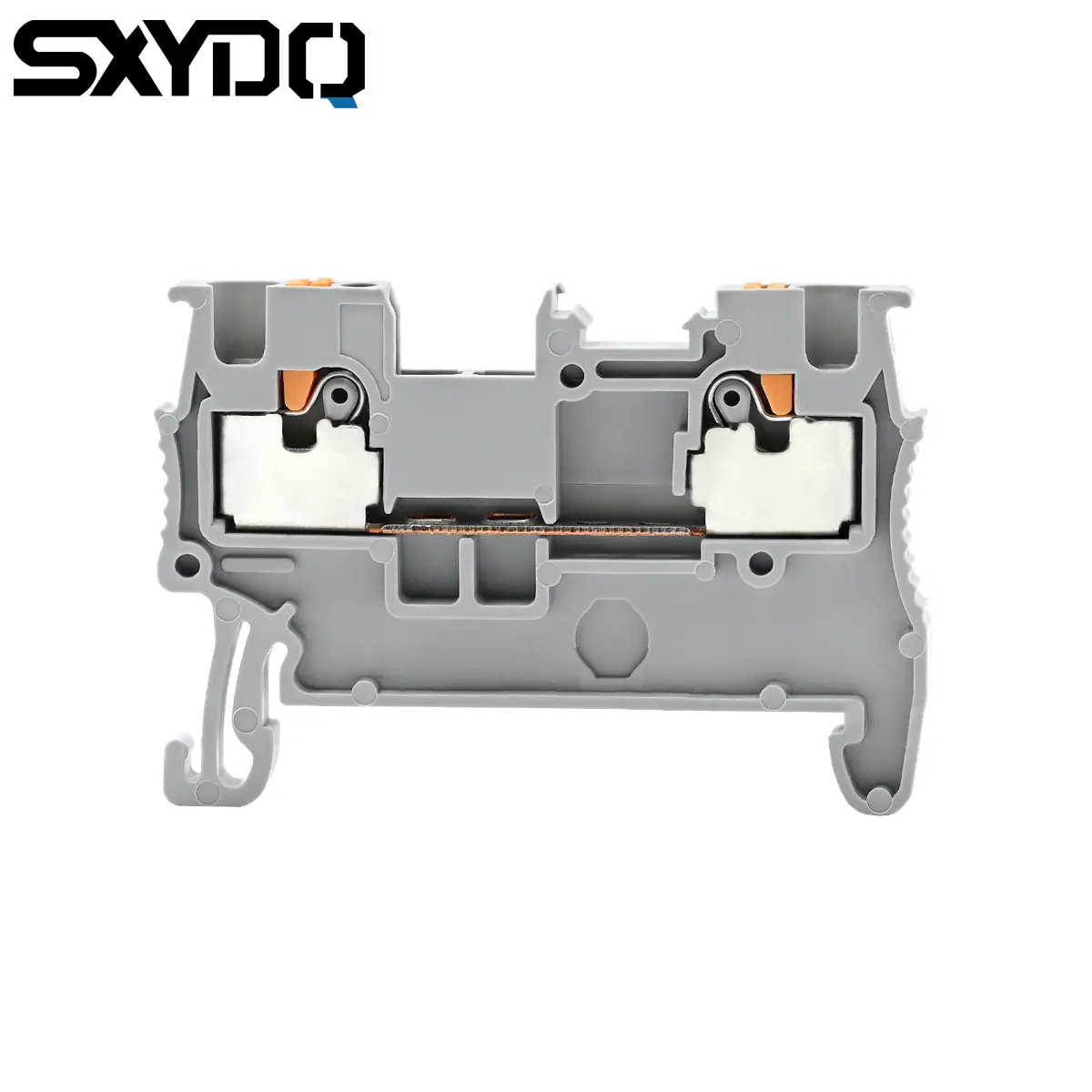
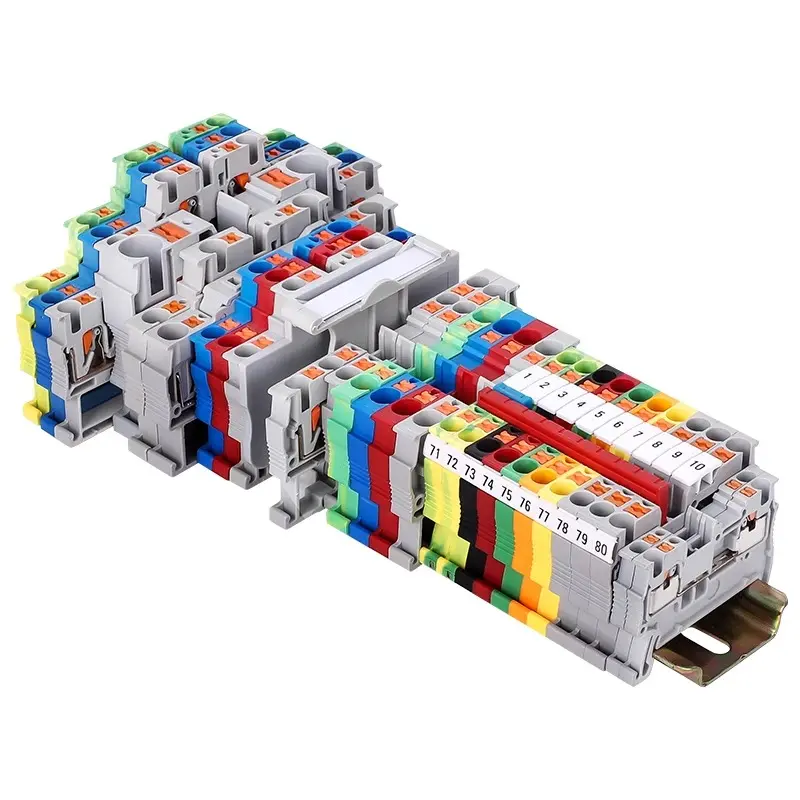
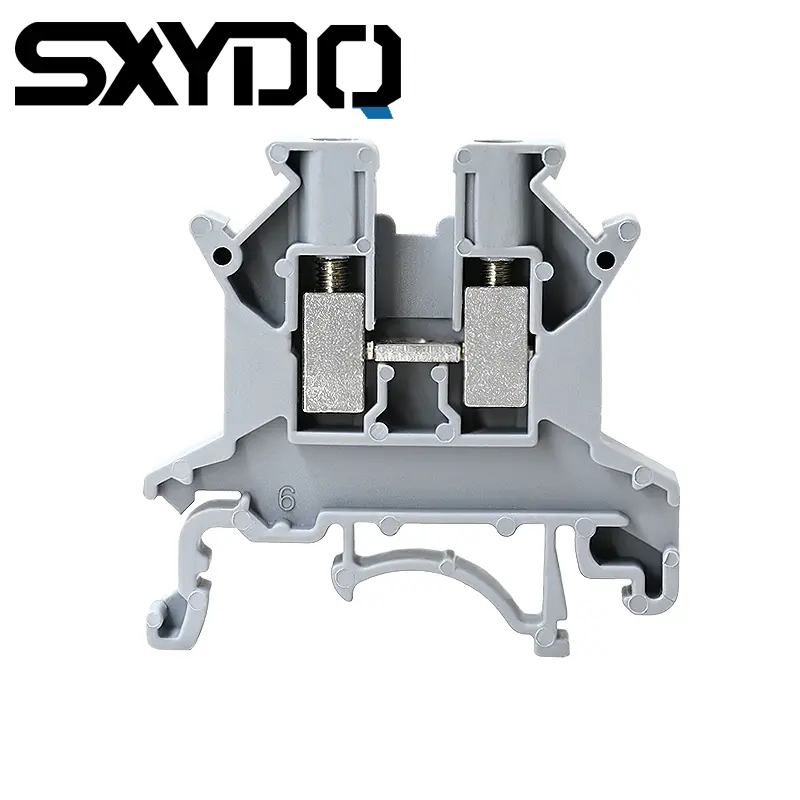
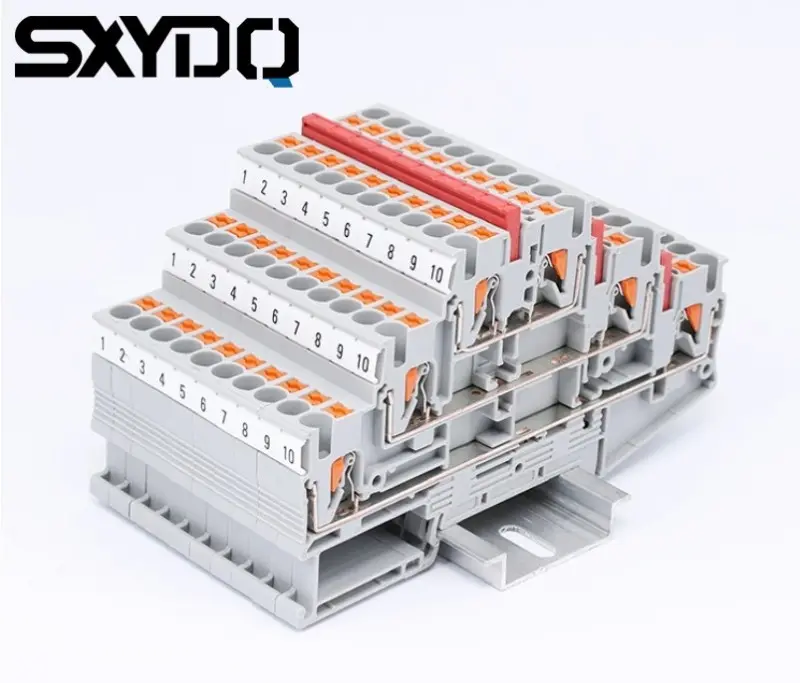
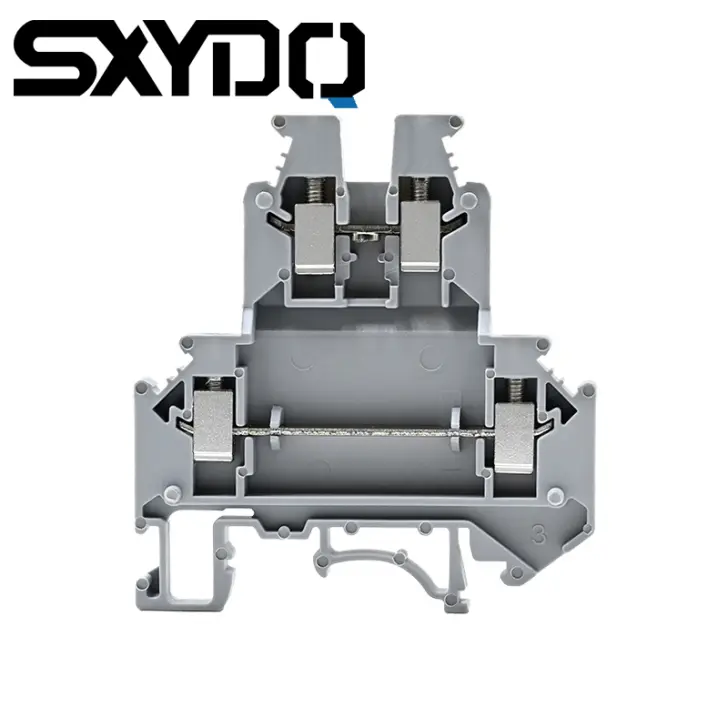
What are the specific advantages of push-in terminal blocks compared to traditional screw terminals?
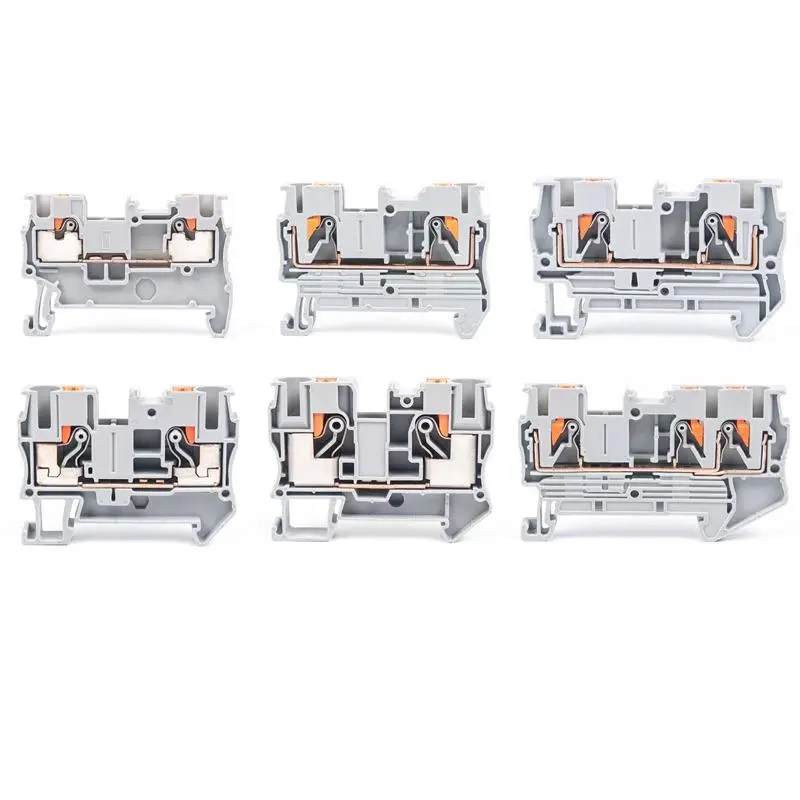
1.Extremely fast wiring speed
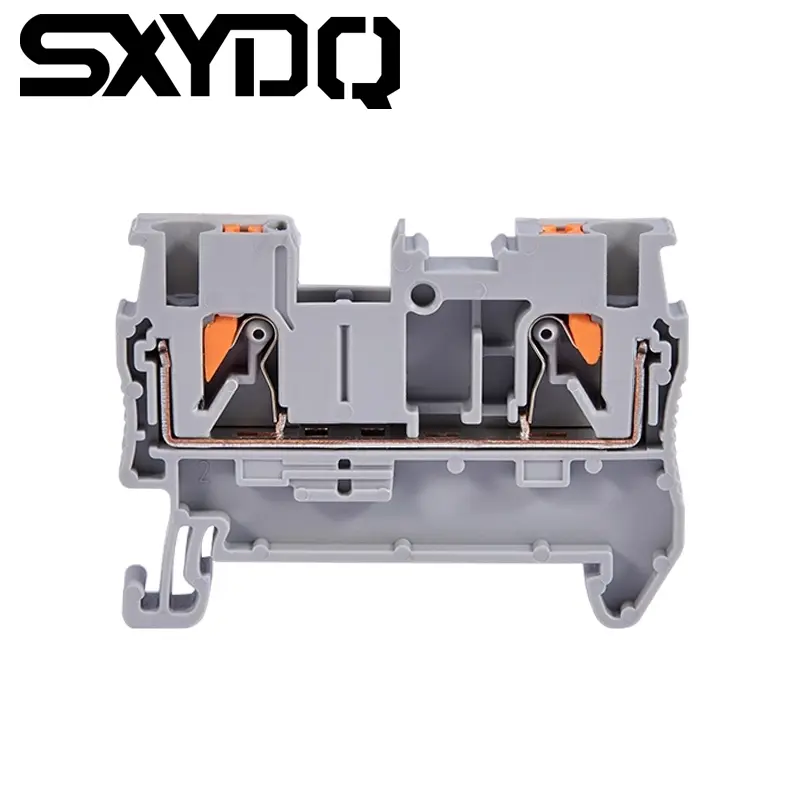
Push-in terminals require no tools, no twisting, no torque adjustment.You simply insert a prepared solid or ferruled wire, and the connection is finished instantly.This typically reduces wiring time by up to 50% compared to screw terminals, greatly shortening installation and commissioning cycles.
2.Consistent, stable connection quality
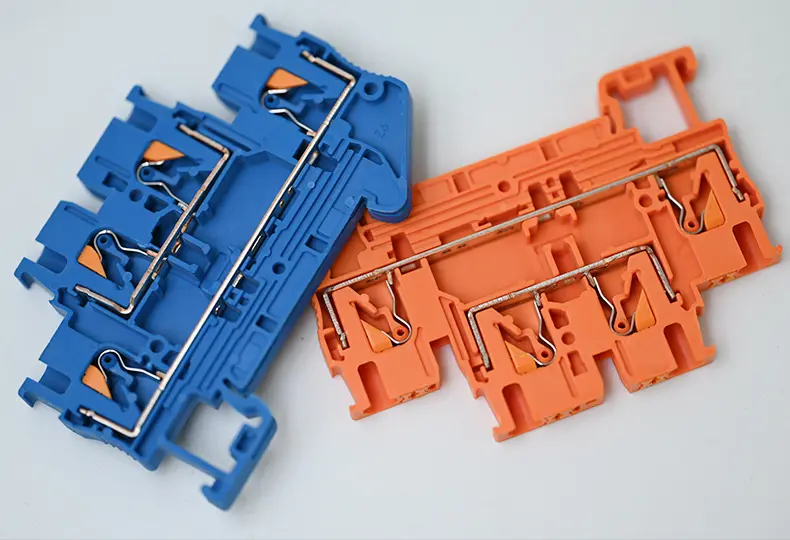
Screw connections depend heavily on worker skill and torque control — too loose causes overheating; too tight damages wires or threads.Push-in terminals use a precision spring-clamp mechanism that provides uniform contact pressure every time.This ensures stable, repeatable quality with almost no human error.
3.Excellent vibration resistance
Spring-clamp design maintains constant pressure even under long-term vibration, which is critical in motors, machinery, automation lines, and transportation equipment.Screw terminals tend to loosen over time under vibration, leading to poor contact, overheating, or system failure.
4.Lower maintenance and higher reliability
Push-in connections are maintenance-free — no re-tightening over years of use.Screw terminals often need periodic inspection and retorquing, increasing labor and downtime costs.
5.Clearer visual inspection
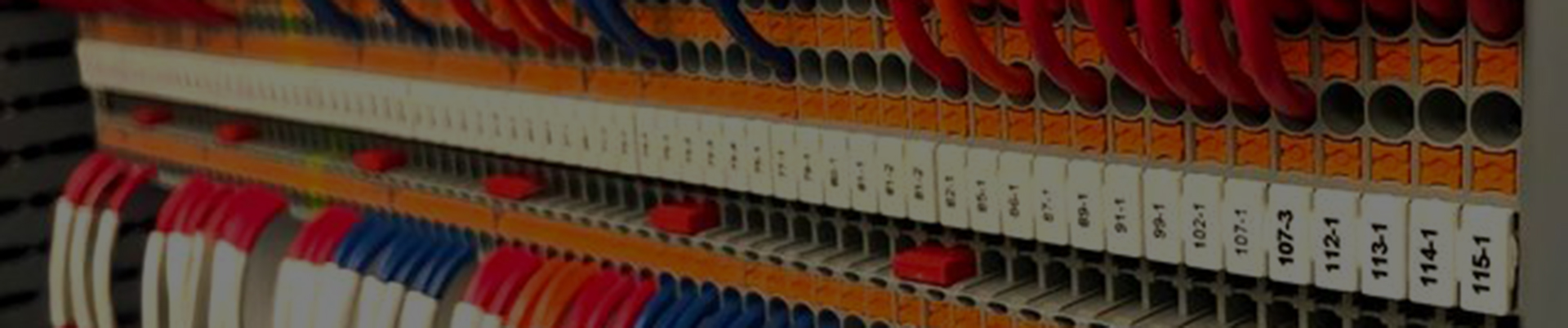
Most push-in terminals include viewing windows or color indicators to show whether the wire is fully inserted and clamped.Workers can visually confirm correct connections at a glance, reducing hidden faults.
6.More ergonomic and safer
No screwdrivers or torque tools mean less hand fatigue and lower risk of injury during mass wiring.Touchsafe designs also improve electric shock protection compared to many open screw terminals.
7.Compatibility with intelligent and Industry 4.0 systems
Modern push-in terminals can integrate sensors for temperature, current, and connection status and support IOLink for condition monitoring and predictive maintenance.Traditional screw terminals remain passive components with no smart functions.
8.Higher wiring density and space efficiency
Push-in terminals allow narrower pitch and more compact layout in cabinets, enabling higher channel density and smaller control panels.Screw terminals generally need more space for tool operation.
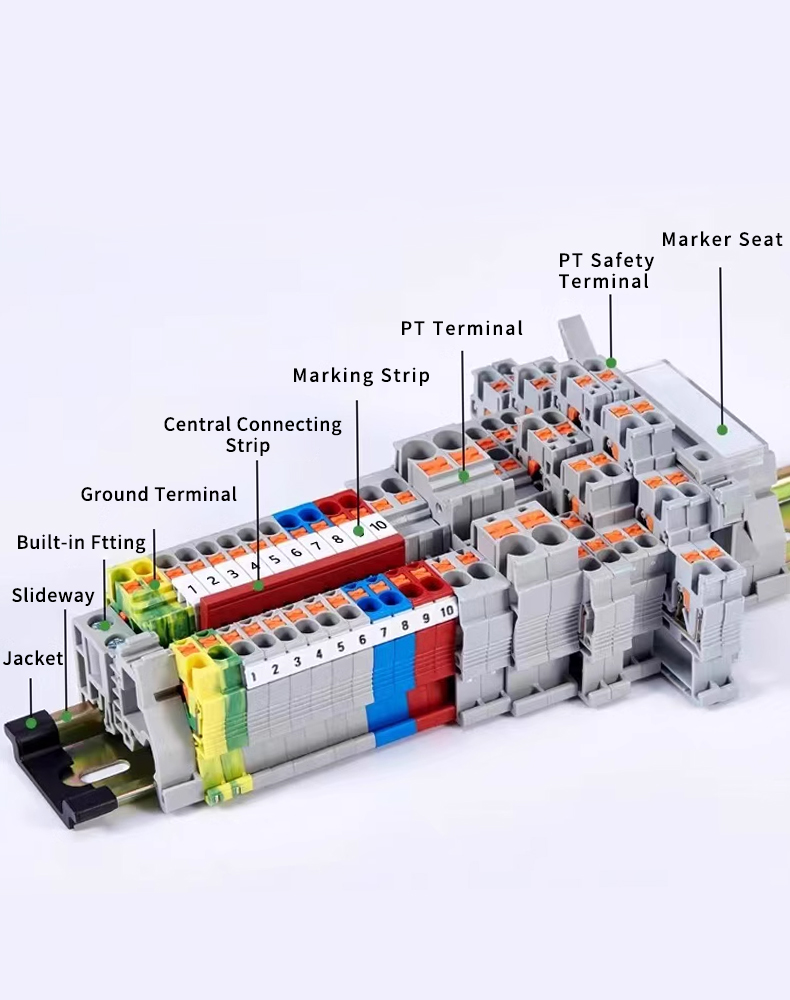
Conclusion
Compared with traditional screw terminals, push-in terminal blocks offer these key advantages:
Much faster wiring — tool-free insertion cuts installation time by up to 50%.
Stable, consistent connections — spring clamping avoids loose or over-tightened screws.
Stronger vibration resistance — prevents loosening in industrial environments.
Lower maintenance — no need for periodic re-tightening.
Visual confirmation — clear indicators show proper connection.
Safer and more ergonomic — reduces hand fatigue and improves safety.
Higher density — saves space in control cabinets.
Industry 4.0 ready — supports smart monitoring, sensors, and IO-Link communication.
In short, push-in terminals improve speed, reliability, safety and intelligence for modern industrial automation.